
North Carolina has it all. Mountains in the west where fall colors take your breath away. Beaches to the east with endless stretches of sand. The piedmont running right through the middle with rolling hills and vibrant cities. Four genuine seasons that give you the full range of weather without the extremes you find up north or down south.
A backyard pool fits naturally into North Carolina living. When summer heat and humidity arrive, when weekends call for family time and evenings need a cool-down after long days, having a pool steps from your back door changes everything.
If you’re thinking about adding a pool to your North Carolina property or replacing a concrete pool that’s become more trouble than it’s worth, you’ve come to the right place. This guide covers everything you need to know about fiberglass pools in the Tar Heel State.
planning your north carolina pool: starting with the right questions
Smart pool projects start with honest planning. Before you contact builders or browse designs, work through what you actually want:
- Who’s going to use this pool most? Kids need different features than lap swimmers or adults looking for a peaceful place to unwind.
- What’s your main goal? Beating Carolina heat, staying fit, hosting gatherings or simply having a quiet retreat at home?
- What does your property offer? North Carolina properties range from compact Charlotte lots to sprawling lake houses and everything in between. Quality fiberglass designs work across that entire spectrum.
- How much weekly maintenance makes sense for your schedule? Be honest here. Your answer shapes which materials and features actually work for your life.
- What safety elements are non-negotiable? Fencing, covers, entry design and lighting all deserve serious thought, especially with kids or pets around.
Finding a licensed North Carolina pool builder who knows local soil and weather patterns is one of the best moves you’ll make in this whole process.
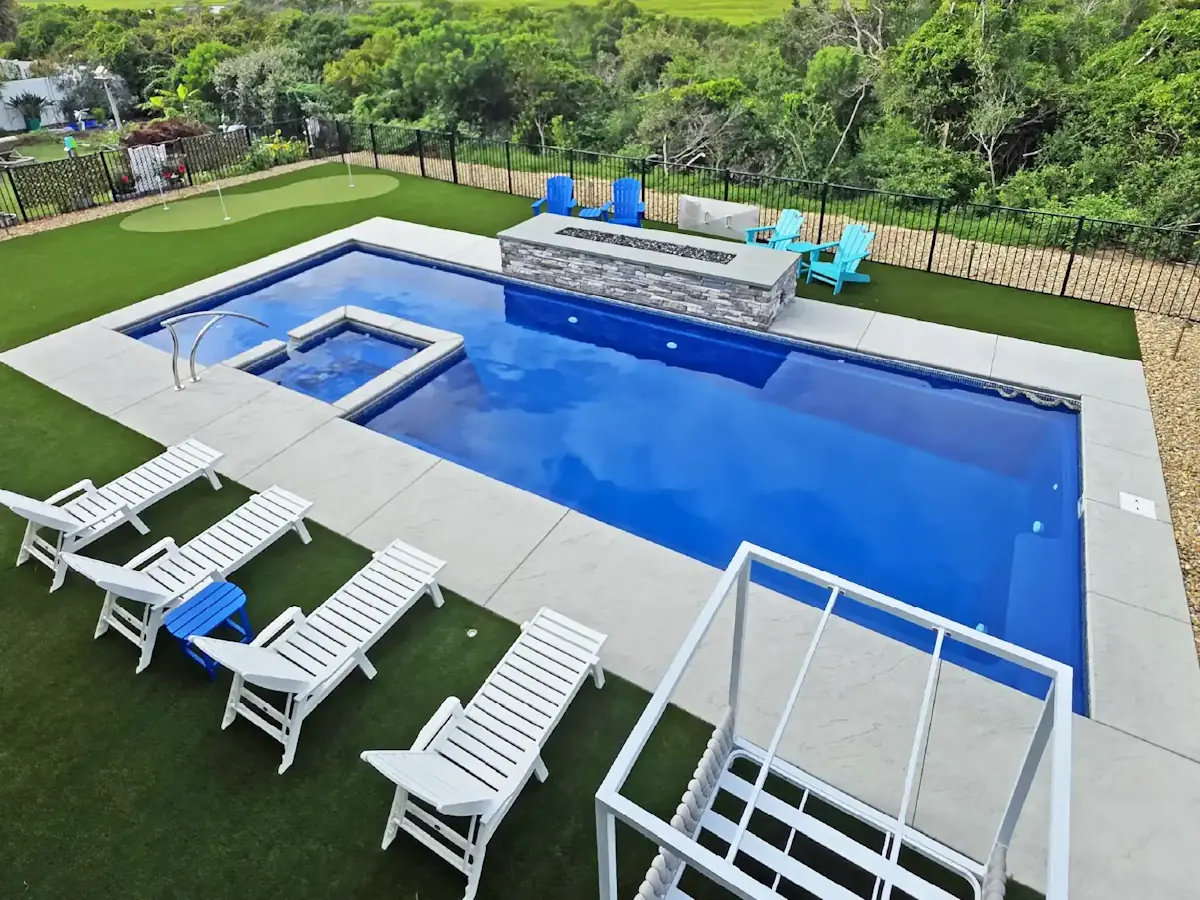
imagine pools across north carolina: charlotte, raleigh, asheville and the coast
North Carolina geography varies more than most people realize, and those differences matter for pool installation and performance.
Charlotte pools work with piedmont red clay that shifts with moisture changes and the city’s humid summers. Raleigh installations handle central Carolina’s mix of clay soil and seasonal weather swings. Asheville pools up in the mountains deal with elevation, cooler temperatures and real freeze-thaw cycles in winter. Coastal pools from Wilmington to the Outer Banks contend with salt air, hurricane prep and sandy soil.
Imagine Pools’ Centurion Core™ technology addresses all of it. Whether you’re in the piedmont, the mountains, the sandhills or right on the coast, the engineering is built to perform.
For North Carolina homeowners near the state’s many lakes, including Norman, Gaston, Jordan, Fontana and plenty more, quality one-piece fiberglass construction handles waterfront conditions with proper drainage management and smart site planning.
finding the right pool design for your north carolina property
pools for carolina neighborhoods
Not every North Carolina yard is massive. Plenty of great pools go into regular-sized backyards in neighborhoods from Durham to Greensboro to Wilmington. Modern fiberglass designs make excellent use of available space while delivering features that genuinely improve daily life.
Look for built-in tanning ledges that work for both adult lounging and supervised kids’ play. Built-in seating creates natural gathering spots. Entry systems designed for safe, comfortable use by everyone from toddlers to grandparents. Smart design delivers excellent results without needing huge space.
larger pools for north carolina properties with room
If you’ve got space to work with—maybe a big lot in the suburbs, some acreage in the country or lakefront property—the full range of fiberglass pool designs opens up. Rectangular pools give you clean lines and dedicated lap lanes perfect for fitness. Freeform designs bring that resort feeling home with natural flow between swimming areas and relaxation zones.
Add a spa and you’ve created an outdoor setup that works year-round, especially nice during North Carolina’s mild fall and spring when heated water extends the season.
why fiberglass outperforms concrete in north carolina
Construction choice matters in North Carolina’s climate. Here’s the clear comparison:
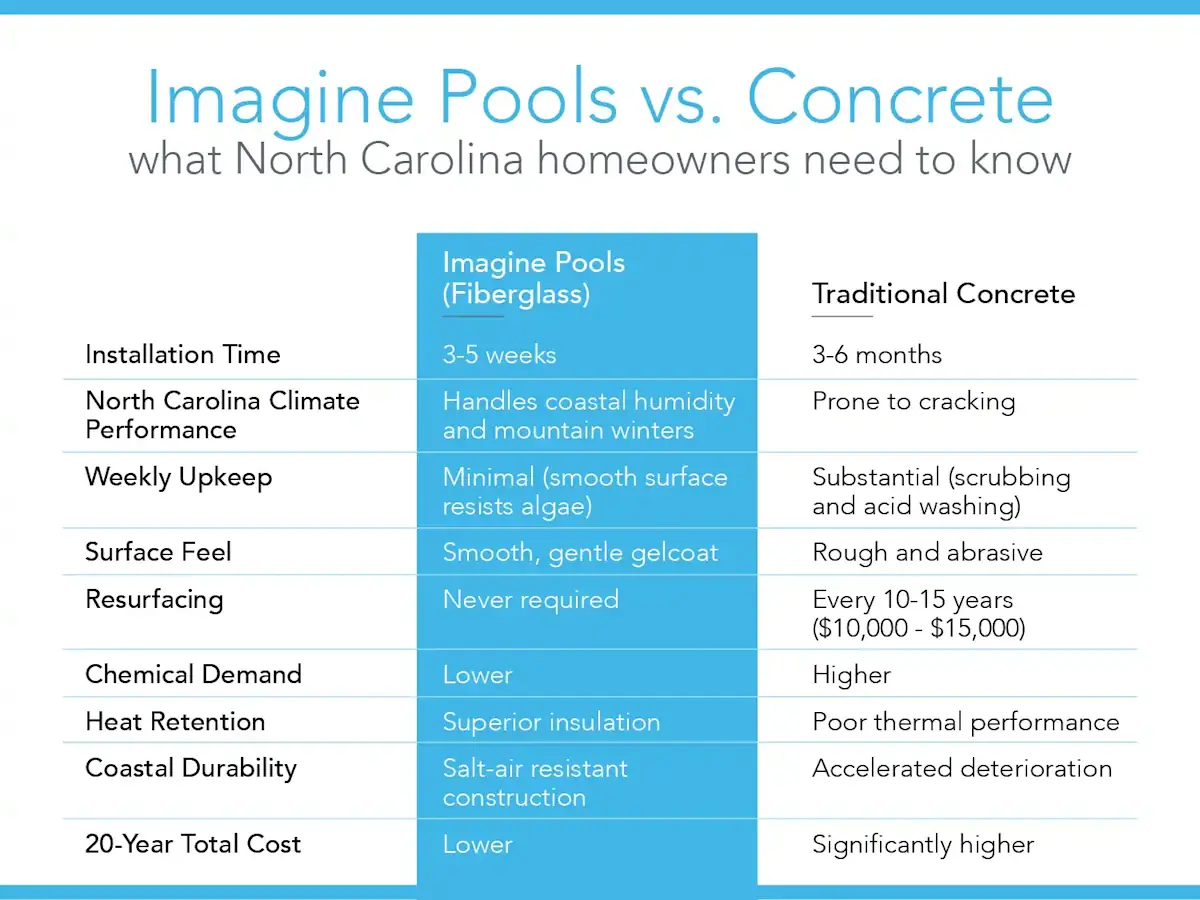
The bottom line: In North Carolina’s varied climate, from coastal humidity to mountain freeze-thaw, fiberglass pools deliver better performance, lower costs and easier maintenance than concrete.
centurion core™ construction: engineered for carolina conditions
North Carolina throws a lot at pools. Coastal areas deal with salt air and humidity year-round. The piedmont has red clay that swells and shrinks with rain and drought. Mountains face real winter cold and freeze-thaw cycles. Summer heat and humidity hit the whole state.
Imagine Pools’ Centurion Core™ technology uses high-performance vinyl ester resin throughout the entire pool structure—not just in certain spots or as a coating but integrated completely through every layer.
This creates a non-reactive composite that flexes with ground movement instead of fighting it. When Carolina clay expands during spring rains and contracts through summer dry spells, the pool moves with it. When temperatures swing from 20°F mountain nights to 95°F summer days, the structure adapts. When coastal salt air beats down year after year, the construction holds up.
Concrete pools are rigid by design. That might work okay in stable conditions. In North Carolina’s varied environment, it’s a recipe for problems. Cracks develop. Surfaces deteriorate. Resurfacing becomes a recurring expense.
north carolina’s seasons and pool ownership: what to expect
One of the most common questions North Carolina homeowners ask: How does a fiberglass pool handle our climate?
The answer is straightforward: really well. The Centurion Core™ construction flexes through seasonal changes without structural problems. Proper winterization protects equipment through occasional hard freezes. The one-piece shell has no seams for weather or ground movement to exploit.
Coastal areas rarely close pools completely, as mild winters mean year-round use is possible with heating. Piedmont pools typically run from April through October. Mountain pools have shorter seasons, but the construction handles winter cold without issues.
Concrete pools in North Carolina face ongoing challenges. Porous surfaces absorb moisture that can freeze and expand. Clay soil movement stresses rigid structures. Coastal salt accelerates deterioration. It becomes a question of when problems appear, not if.
energy efficiency that actually matters
North Carolina utility costs add up, and pool heating is no exception. Extending your season into spring and fall means running a heater. Making that heater work efficiently saves real money over time.
Fiberglass naturally insulates better than concrete. The composite structure and smooth surface hold heat more effectively, so your heater runs less to maintain comfortable temps. During colder seasons (April, May, September and October) when you need just a little heating assist, that efficiency is noticeable.
Over years of ownership, those savings compound. Money better spent on enjoying the pool rather than just heating it.
pool maintenance that stays manageable
North Carolina summers are for living, not for spending hours every week maintaining a pool. Fiberglass pools make that possible.
The smooth, non-porous surface gives algae nowhere to grow. This matters in North Carolina where humidity creates perfect conditions for algae in concrete pools with their rough, porous finishes. The difference in chemical use and scrubbing time is significant.
Your realistic weekly routine:
- Skim the surface
- Check and empty baskets
- Test water chemistry
- Run your cleaner
Once a month, backwash your filter. That’s it for most weeks.
No acid washing. No resurfacing appointments down the road. No constant algae battles. Just pool ownership that leaves you time to actually swim.
installation that fits carolina living
North Carolina summers are prime pool time. Construction that drags through most of the season defeats the purpose.
Fiberglass pools arrive as complete factory-built shells, so installation moves efficiently:
- Week 1: Site prep and excavation
- Week 2: Pool delivery and placement, plumbing and electrical starts
- Week 3: Backfill and deck prep, equipment installation
- Weeks 4–5: Deck completion, hookups, fill and startup
Concrete installation involves multiple on-site phases: steel, gunite, curing, plaster, more curing and filling. This typically runs three to six months. North Carolina spring weather, with storms, heat and humidity, can stretch it even longer.
Choose fiberglass and you’re swimming this summer. Choose concrete and you’re watching construction.
pool colors designed for north carolina
Imagine Pools offers eight gelcoat color options designed to maintain their look through North Carolina’s UV exposure and weather. These aren’t painted-on colors that fade. They’re built into the gelcoat itself.
No fading through Carolina summers. No deterioration through coastal salt air or mountain winters. No periodic touch-ups needed. The pool looks the same years down the road as it did on day one.
The smooth surface is also just better to use. Comfortable underfoot. Gentle on skin. No rough spots that catch swimsuits or scrape knees. Better experience all around.
Ready to see what works for your North Carolina property?
Connect with a certified Imagine Pools dealer who knows your area’s specific conditions.
Browse Imagine Pools designs | Find a North Carolina dealer near you
understanding pool costs in north carolina
Every project is different but knowing what drives costs helps you plan smart.
Base pool costs:
- Pool size and shape: Larger and more complex designs cost more
- Built-in features: Tanning ledges, spas and custom elements add value and cost
- Color selection: Premium colors may carry modest additional charges
North Carolina installation factors:
- Soil type: Piedmont clay or coastal sand affects excavation approach
- Site access: Tight yard access may need crane equipment
- Location: Distance from dealer affects transportation
- Permits: Municipal requirements typically run $200–$1,000 or more
- Coastal considerations: Hurricane zones may have additional building requirements
Additional costs:
- Decking: Concrete, pavers or stone—different price points
- Fencing: North Carolina requires barriers—material and style vary
- Equipment: Heaters, covers, lights and automation
- Landscaping: Finishing your outdoor space
The number people miss: 20-year total cost of ownership, not just purchase price. Zero resurfacing costs, lower chemicals and better efficiency mean fiberglass costs thousands less than concrete over the pool’s life.
north carolina pool installation: handling regional differences
North Carolina’s geography creates different installation considerations by region.
Piedmont red clay around Charlotte and Raleigh requires specific excavation depths and engineered backfill to handle expansion and contraction. This clay swells when wet and shrinks when dry, creating constant ground movement.
Mountain areas bring elevation changes and rocky terrain that affect excavation planning. Hillside properties create opportunities for elevated or terraced designs with great views.
Coastal areas need attention to drainage, hurricane building codes and salt-air durability. High water tables near the coast add drainage requirements.
The one-piece fiberglass shell works well in all these scenarios. No seams to separate. No liner to shift. One solid structure that moves with the ground instead of cracking against it.
Finding a builder with North Carolina experience isn’t optional—it’s how you protect your investment.
pool permits and regulations in north carolina
North Carolina requires building permits for pool construction. Requirements vary by location but typically include:
- Building permits from local authorities
- Electrical permits for equipment
- Barrier compliance (4-foot minimum fence with self-closing, self-latching gates)
- Setback requirements (distance from property lines)
- Additional coastal requirements in hurricane zones
- Possible septic considerations in rural areas
Larger cities like Charlotte, Raleigh and Wilmington have more detailed processes and longer timelines. Smaller towns tend to be more straightforward while maintaining safety standards.
Your builder should handle permits as part of the project. Confirm this before signing anything.
maintaining your pool through carolina seasons
North Carolina’s four seasons each bring their own maintenance rhythm.
During pool season (roughly April through October for most of the state):
- Skim debris regularly
- Empty baskets weekly
- Test and balance chemistry weekly
- Run your cleaner as scheduled
Monthly:
- Backwash filter
- Check equipment
- Monitor water level
carolina-specific pool maintenance notes
Spring pollen can be heavy across North Carolina, especially in the piedmont. A good cover helps during peak weeks. The smooth fiberglass surface makes cleanup easier than concrete when pollen accumulates.
Summer humidity affects chemistry. Weekly testing keeps you ahead of issues. Fiberglass holds chemical balance better than concrete, which constantly reacts with sanitizers.
Fall brings beautiful weather and falling leaves. Stay current with skimming to prevent organic breakdown that affects water quality.
Winter prep varies by region. Coastal areas often keep pools open with heating. Piedmont typically closes from November through March. Mountains close earlier and open later. Proper winterization protects equipment through cold snaps regardless of region.
why north carolina families choose imagine pools
Still thinking it over? Here’s what Carolina pool owners consistently value:
Long swimming season: North Carolina offers 6–8 months of pool weather in most areas, longer on the coast with heating.
Home becomes the gathering place: A pool makes your place the natural spot for family and friends all summer.
Property value: Quality pools increase home value in North Carolina’s competitive markets where outdoor living matters.
Year-round appeal: Mild North Carolina weather means pools with spas extend outdoor living well beyond traditional pool season.
Lower lifetime costs: No resurfacing expenses and better efficiency save thousands over 20 years.

frequently asked questions about imagine pools in north carolina
ready to move forward with your north carolina pool?
North Carolina’s diverse climate demands pools built to perform through coastal humidity, piedmont clay and mountain winters. Imagine Pools delivers Centurion Core™ technology, vinyl ester resin construction throughout every layer and proven performance in varied conditions.
The result is a pool that needs less work, costs less over time and delivers more reliable enjoyment than concrete. That’s what North Carolina homeowners count on.
Working with a certified Imagine Pools dealer means proper installation, full warranty protection and a builder who knows North Carolina’s specific challenges.
Next steps:
Explore designs: Browse Imagine Pools’ complete collection for designs that fit North Carolina properties—from compact neighborhood pools to larger installations for spacious lots.
Get pricing: Contact a certified Imagine Pools dealer for accurate cost estimates based on your property, location and design preferences.
Start planning: Talk with a local expert who understands North Carolina soil, climate and building requirements.
Contact a local Imagine Pools dealer today to begin planning your North Carolina pool.


